
Author: Theo F. and Kotomi T.
Editor: Theo F. and Kotomi T.
How much do you know about Kendo?
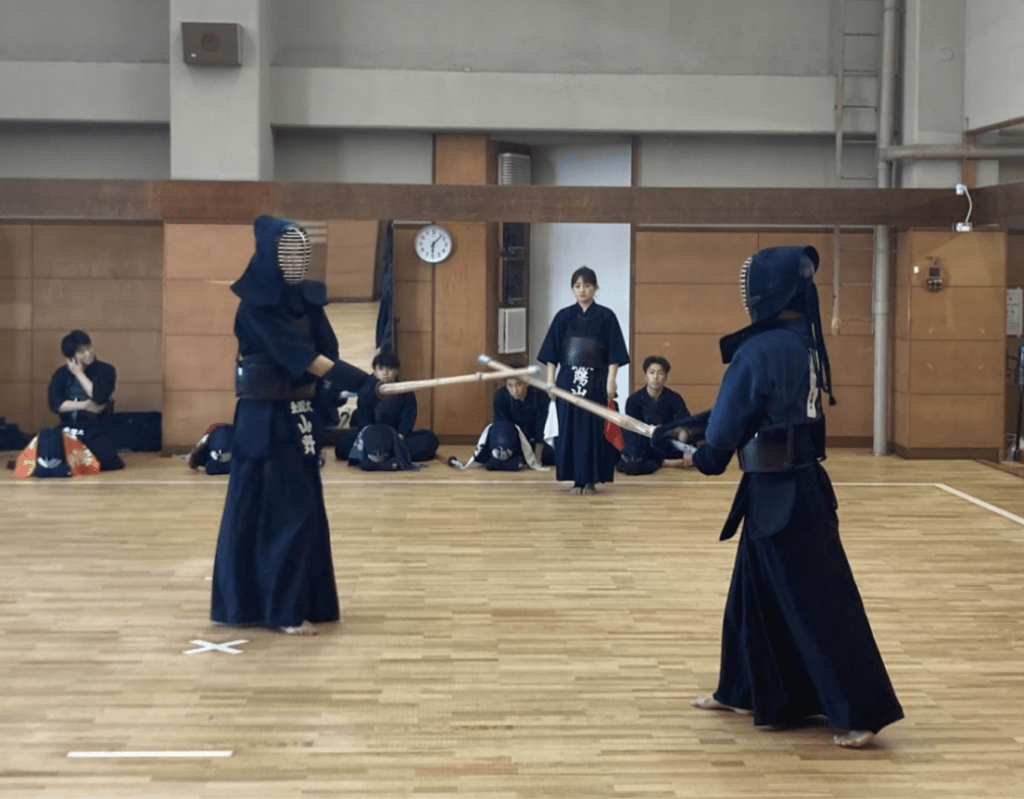
The term “Kendo” was first used in the first year of the Taisho era, 1912. Kendo is an athletic sport in which players wear kendo gear and use bamboo swords to strike each other one-on-one, but more importantly, it is a martial art that aims to train the body and mind through continuous practice and to develop the human spirit (Source: All Japan Kendo Federation). After the Edo shogunate was established, Kenjutsu evolved from being focused on killing to the art of “Katsunin Ken” (healing sword), which aimed to develop the spirit of the samurai.
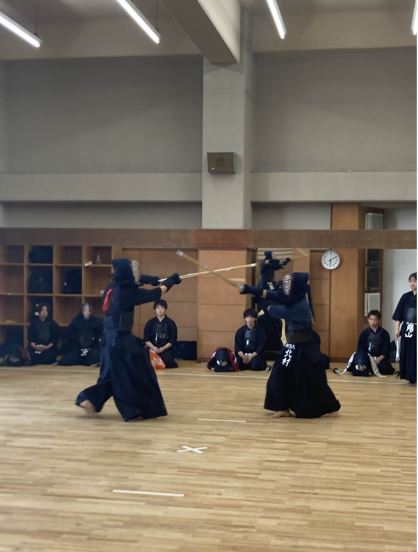
Here are the basics of Kendo: Kendo is a three-strikes game and the winner is the one who gets two of the three strikes first. The match lasts for five minutes, during which players are awarded one point for each valid strike (upon the mask, abdomen, forearm, and throat).
The Kendo Club at TIU is a varsity club. The dojo is located on the second floor of the Kawage Campus 1 gymnasium. Currently (as of April 2024), there are 24 members (23 male and 1 female). The Kendo varsity club practices every Monday, Wednesday, Friday, and Saturday from 5:00 p.m. on weekdays and from 11:00 a.m. on weekends. We interviewed the Kendo club for their first participation in the National Tournament in the last 39 years. Head Instructor Demizu, Instructor Terachi, and Captain Oka were kind enough to come to the interview. Here is what we learned and felt from the interview.

Road to the National Tournament
We first spoke to the Kendo club regarding their first participation in the National Tournament (2023) in the past 39 years.
Captain Oka (senior) started Kendo in the first grade of elementary school and has been practicing Kendo for over 12 years. He says he started Kendo because his father and older brother were both Kendo players. In the 2022 Kanto Student Kendo Championships, he participated in the National Tournament and lost after a series of draws with his opponents. The frustration from the loss was a motivating factor for him and the club members, and it became the energy for their training, strengthening their bonds, and leading them to victory.
In 2023, the team was able to participate in the All Japan Kendo Championships, however, this was all thanks to Captain Oka. In the loser’s bracket for the National Tournament 2022, Oka – a third-year student at the time – witnessed as his seniors lost two matches. Had he lost another match, the team would not have been able to get a seed. Despite the immense pressure on Captain Oka, he persevered and won the match, securing the team a ticket to the All Japan Kendo Championships for 2023.
Head Instructor Terachi said that he was very happy that the entire university, including the chancellor and even graduates, were congratulating the Kendo club for its participation in the national tournament. When Mr. Demizu took on the job as a Kendo instructor at Tokyo International University, there were only five members in the club. However, from that situation, he worked hard with the team and gradually increased the number of members.
Through his encouragement, the team finally made it to the national tournament for the first time in 39 years. However, he says that there is no secret strategy for winning Kendo games, it is the “bond” that every one of the members has formed through their dedicated devotion to Kendo. The goal of participating in the national tournament has been achieved because of the bonds that have been formed through the years, from seniors to juniors and from one generation to the next.
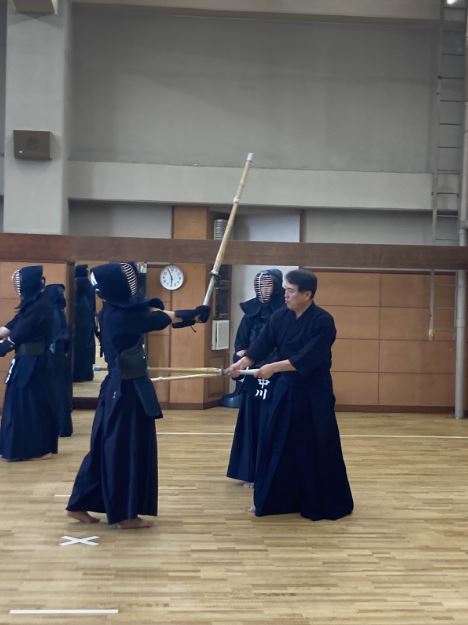
Instructor Terachi comments that participation in the national tournament was only a starting point and that it was an experience for the team that will hopefully lead to a victory in the future.
The Essence of Kendo
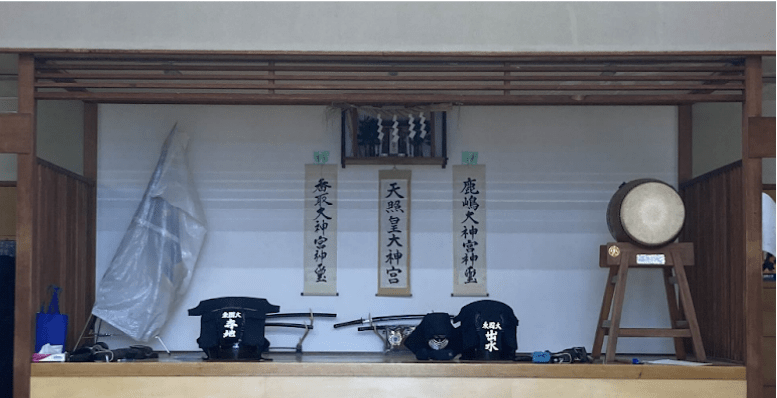
Next, we asked what the Kendo club values and aims to nurture.
Head Instructor Demizu says that in Kendo, it is important to nurture the human spirit while paying attention to the following virtues.
The first one is the practice of “ki” (energy of life) – to be quick and attentive to others as the occasion demands, which is applied to many facets of life. For example, in a master-student relationship, if the master’s Kendo uniform is dirty, you can say to him, “I’ll wash it.” to show your concern for him; or if you are riding a bicycle, you can prevent accidents by paying close attention to the road, anticipating when people might come around the corner.
The second one is the practice of appropriate behavior, as in behaving like a proper member of society, like a student of Tokyo International University, and so on. Since Mr. Demizu took office, he has been teaching his students to act in a disciplined manner and has successfully prevented any incidents or accidents.
Mr. Demizu says by adopting these values, the human virtue of students is enhanced and the bond within the team will be strengthened.
Lastly, Mr. Demizu emphasized the importance of listening. One will not improve if they do not possess the ears to listen to what is taught.
Overall, these are all related to Tokyo International University’s mission – to nurture “Kotokushin”. or unbiased harmony. The practice of “ki”, like the energy to preserve and the energy to persist, will prove necessary as you discover yourself and your role in the international community. Based on these ideas, you can say that we should train to be strong and gentle, and in other words, tough.
Just like how Rome was not built in a day, Mr. Demizu explains that it also takes hard work, effort, and preparation to achieve a big goal, and that is not easy to accomplish.
When Captain Oka joined the Kendo club, the club was a very close-knit group, so now that it’s his turn to lead the club, he thought he would tighten the atmosphere and carry on having close-knit relationships with the team.
Oka says that it was difficult for him as the leader since each member had different goals, and so he made the effort to listen to the opinions of each member to improve practice sessions to those that would satisfy all members. He believes that this would increase motivation within the club.
As the leader, Oka would also imitate the good points of the Kendo clubs of other universities whenever they had joint practices, to make their practice methods more efficient and effective.
Through the interview, we can see that Kendo is a sport that values decision-making from the heart, the practice of “ki” and attentiveness, and the results of one’s hard work.
Future Goals
Head Instructor Demizu, Instructor Terachi, and Captain Oka all agreed that participating in the National Tournament was not an end goal, and expressed their wishes to improve the team’s skills and secure a victory in future competitions.
Overall, there are two important things emphasized throughout the interview.
First, the joy of participating in the national competition is not fueled by the “talent” that we bring to the games, but by the efforts and hard work in daily individual and group practices. After being away from the national tournament for a long time, they gradually built up and created bonds and connections among the team, which was something they achieved along the way and facilitated their entry to the tournament. In other words, we can see that the process was the most important part. Second, developing the relationship between Kendo and virtue by having an open mind and tough spirit will allow you to grow further as a human being.
Throughout the long history of Kendo, we can see that Kendo is a kind of sport that has a positive impact not only in terms of winning and losing but also in terms of learning important life lessons. We can all do this by setting a certain goal in life and working hard towards it.
If joining the TIU Kendo club sounds enticing, you can go to the Instructors’ Office next to Cafeteria 3 at Kawagoe Campus 1 to let them know you are interested in the club.




 Times Of TIU
Leave a comment