
Writer: Samantha P.
Editor: Jonathan S.

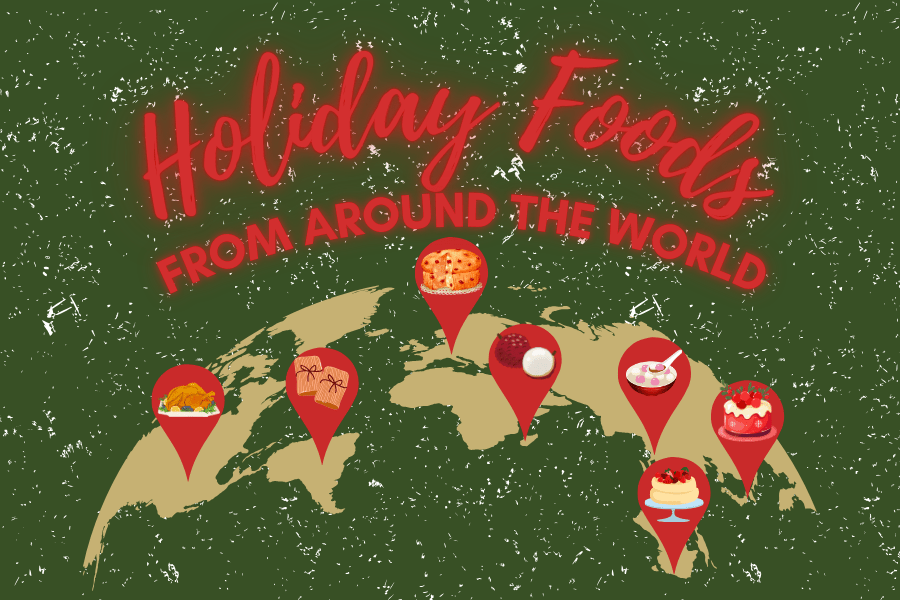
The holidays are a wonderful time to enjoy the delicacies of many cultures, which adds comfort and a sense of connection to this special season. The diverse student community at Tokyo International University provides a unique chance to explore holiday customs around the world, with food serving as the factor that unites everyone. Why not try some traditional holiday foods from other cultures and go on a food adventure this winter break with your friends?
Here are ten holiday foods to explore and tips on how to find them:
1.Japan – Christmas Cake
The Japanese Christmas Cake, a light and fluffy sponge cake covered with whipped cream and strawberries, is a modern tradition that originated in the postwar era as a sign of prosperity and joy. It’s a wonderful dessert that brightens Christmas celebrations.

Christmas cakes are available in most Japanese bakeries and department stores during December. Popular establishments such as Ginza Cozy Corner and convenience stores frequently offer smaller, more affordable versions.
2. United States – Roast Turkey
Roast turkey is a staple of Thanksgiving and Christmas dinners, usually accompanied with stuffing, cranberry sauce, and mashed potatoes. It symbolizes family gatherings and thankfulness.

Frozen turkeys are sold in international stores such as Costco and Kaldi Coffee Farm. Moreover, several Tokyo restaurants provide roast turkey as part of their holiday menu.
3. Philippines – Lechon
Lechon, a whole roasted pig with delicious meat and crispy skin, is the main course of Filipino holiday dinners. It is essential for Christmas and New Year’s festivities and represents prosperity.

Authentic lechon is served at Filipino restaurants in Tokyo, and there are some Filipino restaurants near Ikebukuro Campus. These holiday feasts are frequently available for preorder.
4. Australia – Pavlova
This meringue-based dessert is ideal for Australia’s summer Christmas because it is topped with fresh fruit and whipped cream. It is a symbol of elegance and lightness and is named after the Russian dancer Anna Pavlova.

Egg whites, sugar, and cream are all accessible in Japanese supermarkets and can be used to prepare Pavlova at home. During the holidays, it may also be available at some foreign bakeries.
5. Indonesia – Nastar
Nastar are small, buttery cookies filled with tangy pineapple jam, traditionally served during Christmas and Eid. In keeping with Indonesia’s historical past, their name is derived from the Dutch words “ananas” (pineapple) and “taart” (tart). Since these cookies are frequently distributed to guests at joyous occasions, they represent warmth and friendliness.

These cookies might be available at Indonesian shops around Tokyo. There are also recipes online for baking them at home.
6. France – Bûche de Noël (Yule Log)
The classic Yule log can be seen in this rolled sponge cake with chocolate frosting, which honors the long-standing custom of burning logs during winter solstice festivities. It represents coziness and solidarity.

Delightful Bûche de Noël cakes are available throughout the holidays at a number of Japanese patisseries, such as Ginza or Aoki.
7. Spain – Turrón
A passed-down Spanish treat, turrón is created with egg whites, honey, and almonds. Its origins are in Moorish Spain, where it combined European and Arabic culinary styles. It is typically consumed around Christmas and represents sweetness and the delight of sharing.

Turrón is available in Spanish specialty shops in Tokyo. Additionally, department stores like Isetan may have it in their international sections.
8. Korea – Hotteok (Sweet Korean Pancakes)
Hotteok are chewy pancakes stuffed with a sticky mix of cinnamon, brown sugar, and almonds, which is a common winter street snack. The joy of sharing small pleasures on chilly winter days is embodied by the warmth and sweetness of hotteok.

Try visiting Shin-Okubo, which is Tokyo’s Koreatown, where they serve freshly made hotteok. There are also Korean grocery stores that sell instant mixes for a quick treat at home.
9. Italy – Panettone
Panettone is a sweet, fluffy bread stuffed with raisins and candied fruits that originated in Milan. Its origins can be traced to the Renaissance, when the costly ingredients made it a luxury delicacy. It symbolizes happiness, celebration, and the spirit of giving.

Italian bakeries in Tokyo offer authentic panettone. You can also look for imported versions at Kaldi Coffee Farm or Seijo Ishii.
10. China – Tangyuan (Sweet Glutinous Rice Balls)
Tangyuan are warm, sweet broth-cooked rice balls that are soft and chewy and filled with red bean or black sesame paste. It is typically eaten during the winter solstice and Lunar New Year. The act of sharing tangyuan on chilly winter nights symbolizes family closeness, while the circular shape stands for peace.

Chinese supermarkets in Nishi-Ikebukuro stock frozen tangyuan for easy preparation. Some Chinese restaurants in the area also serve freshly made versions.
Discovering holiday cuisine is a journey that explores the customs, values, and stories of different countries. It goes beyond simply trying out new dishes. Each food reflects the history of its culture and shows how different individuals value and celebrate their unique traditions.
By tasting these dishes, you can learn about the diversity of TIU’s student community and establish a connection with the different traditions that make every country special. Let’s celebrate the holiday season while embracing diversity, spreading happiness, and forming relationships with others. Food really is a worldwide language, whether you make these dishes at home or enjoy them in Tokyo’s bustling foreign neighborhoods. Let’s celebrate one bite at a time!




 Times Of TIU
Leave a comment