
Writer: Yurara T.
Editer: Karen W.
Translator: Bermet K.
Buildings such as universities and shopping malls are becoming more earthquake-resistant, thanks to the yearly progress in earthquake countermeasures. But what about your room? About half of the injuries caused by the Great Hanshin-Awaji Earthquake in 1995 were due to “furniture falling over.”
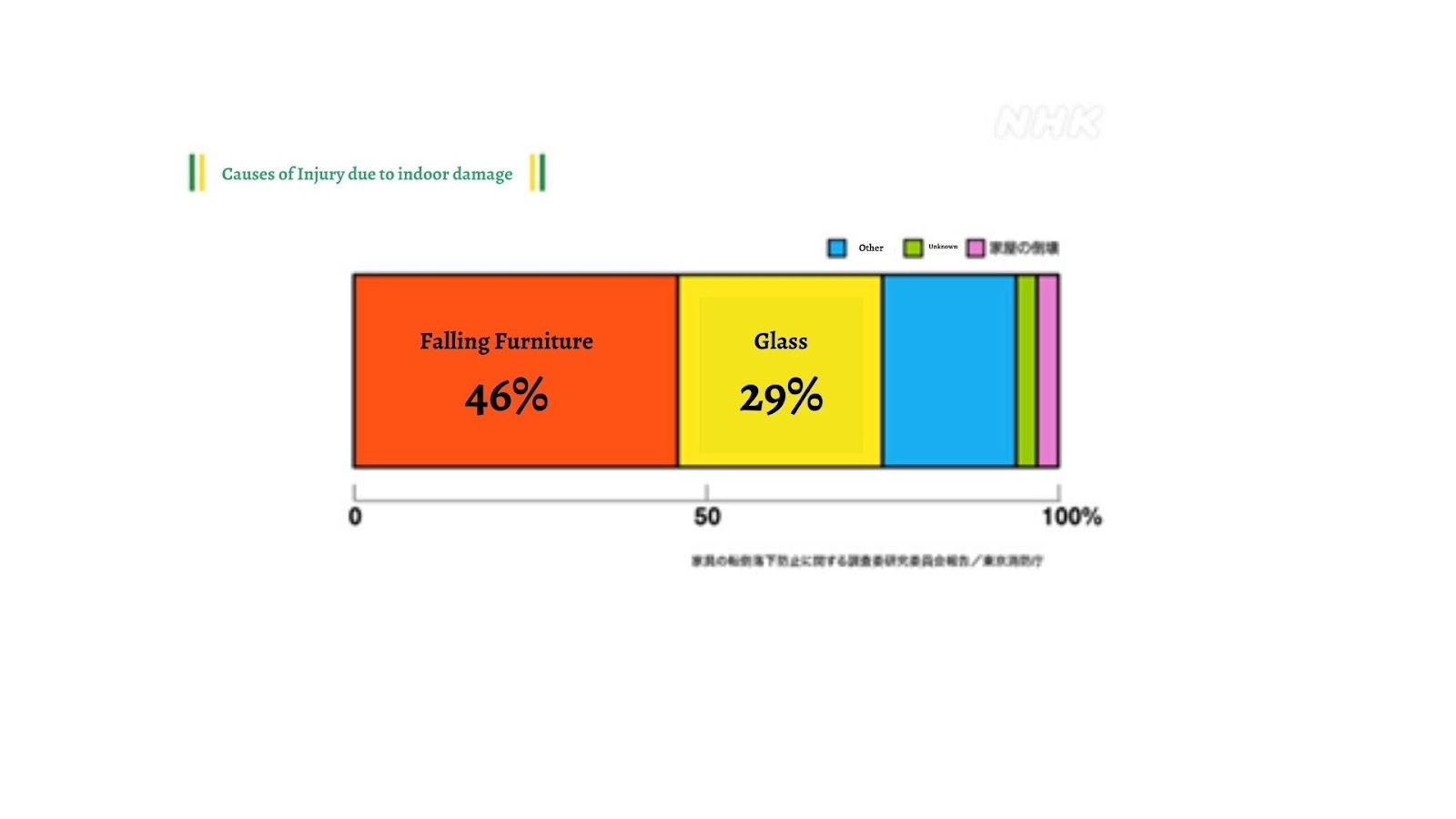
Turn your room into a safer place to relax, whether cooking, relaxing, or sleeping in your own space!
1. Prevent furniture from falling over
Tall furniture, such as wardrobes and bookshelves, must be prevented from falling. At this time, it is essential to devise a way to do so by following the house’s rules and the furniture’s size.
If you do not have furniture fall prevention equipment, you can use non-slip mats or cardboard boxes to fill gaps.
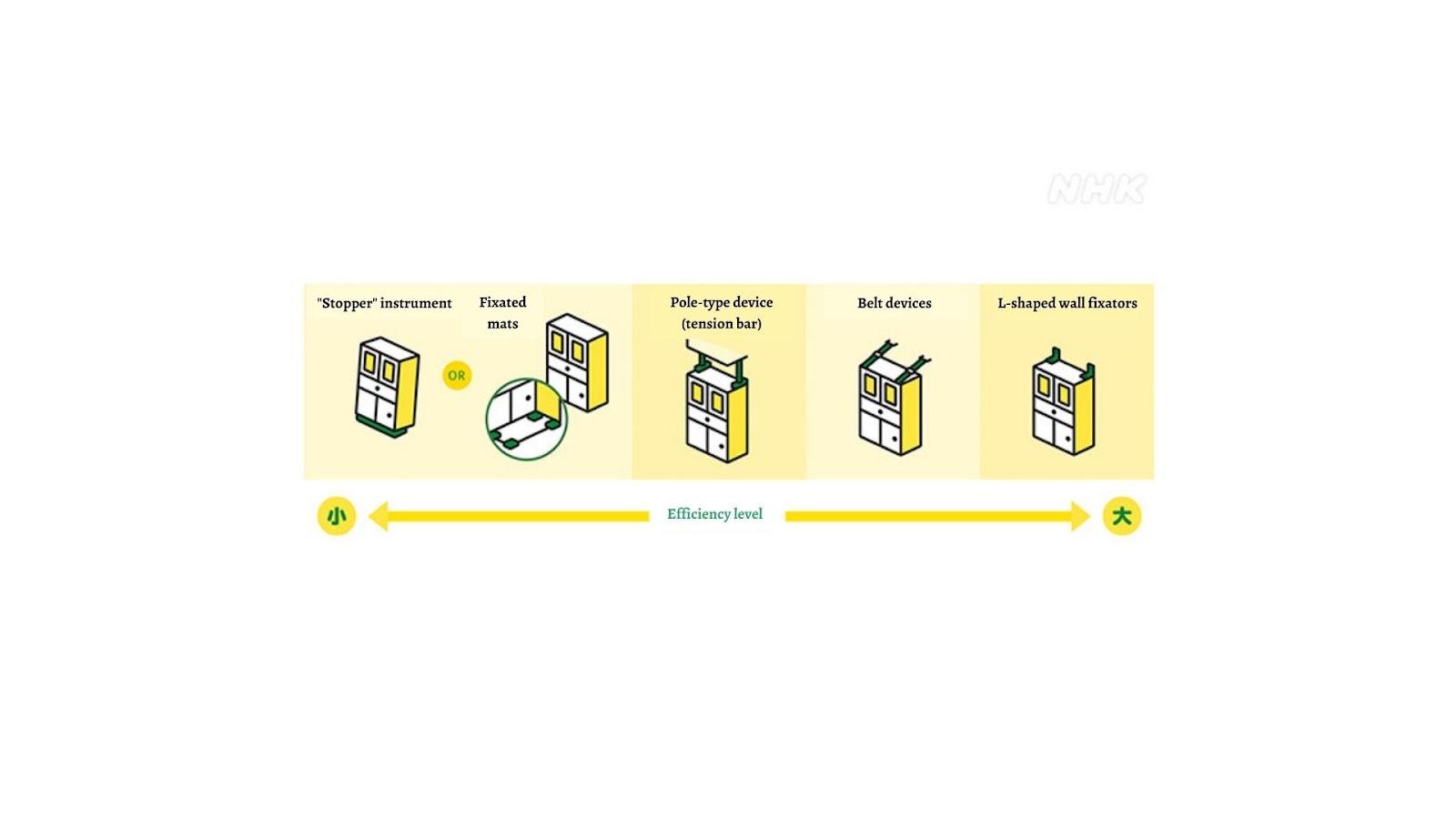
Also, rearrange your furniture if no fall protection device fits ir or you simply cannot find the device. Make sure to keep your furniture out of the sleeping area in case it falls over.

Additionally, be prepared for other falling hazards, such as heavy books on the shelves, drawers, or boxes in the closet. https://www3.nhk.or.jp/news/special/saigai/basic-knowledge/basic-knowledge_20220501_01.h
2. Consider earthquake countermeasures in TIU’s student dormitories.
[Women’s communal dormitory on the second campus.]
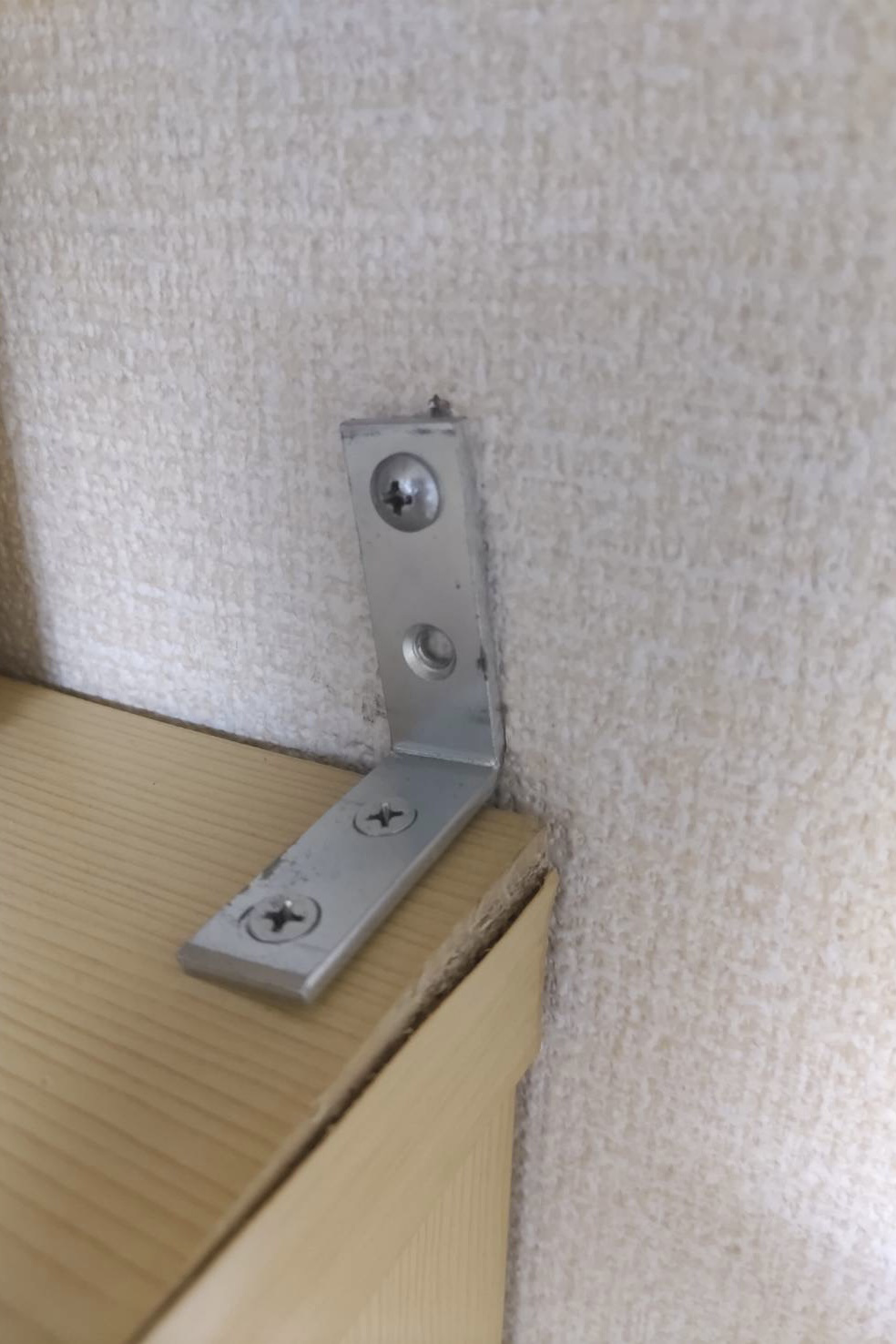
The women’s communal dormitory furnishings are fixed to walls and well-prepared for earthquakes. However, be careful when arranging your own furniture. Make sure to set the layout and place the furniture in a safe-falling way.
Another thing to copy from the dormitories is their battery-operated doors which are unlikely to malfunction during an earthquake. However, in case of a large earthquake, there is always a possibility that the doors might get jammed. Since the rooms have no windows, open the doors as soon as an earthquake starts. This rule applies not only to dormitories but to all households in general.

4. Prepare all the necessities
Stockpile the minimum necessary items you will need to live in the event of an actual disaster. Preparing an emergency bag will help you evacuate to a safety zone quickly.
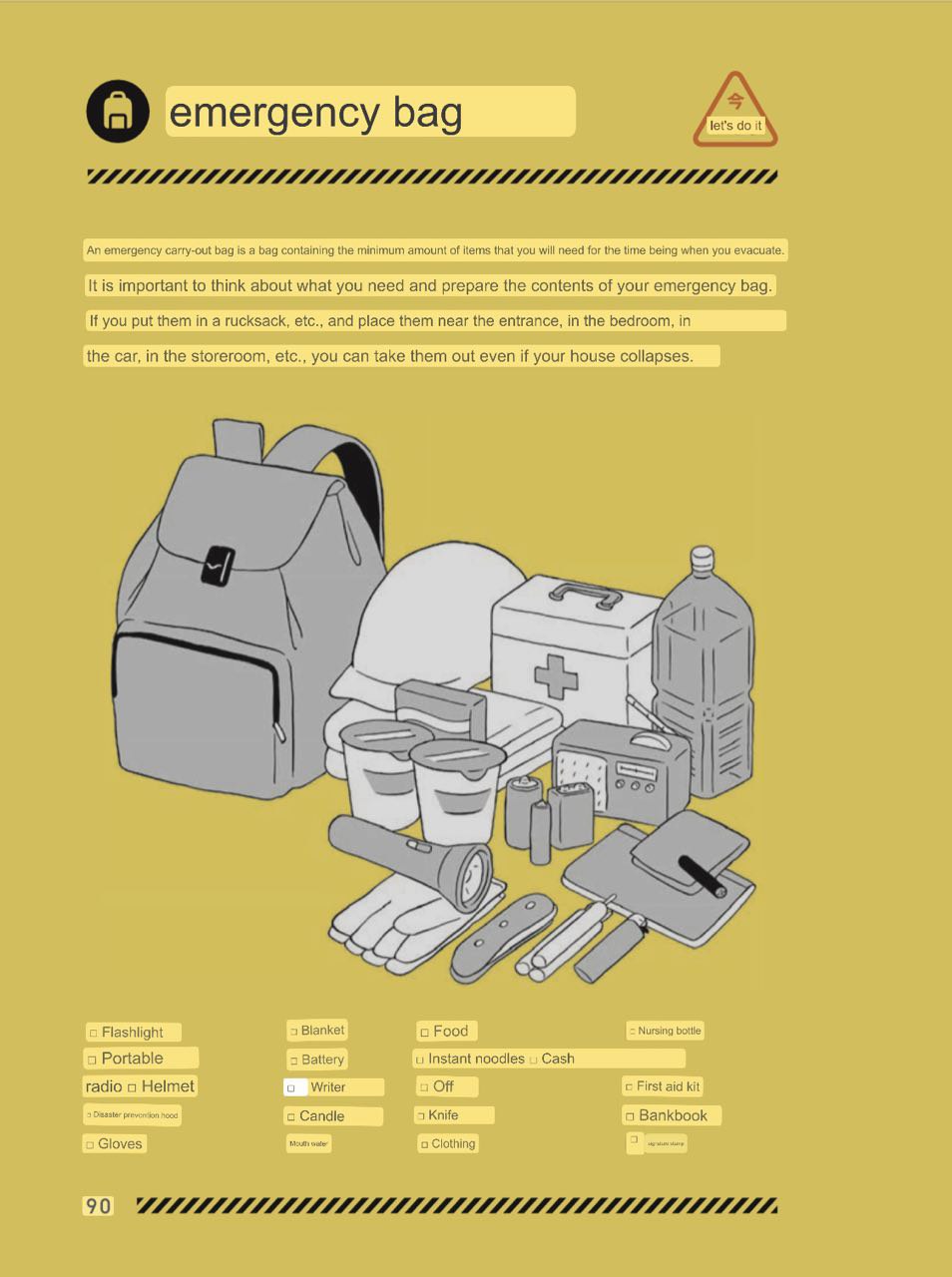
You can also use Tokyo Stockpile Navi to find what necessities are essential to stock.
Tokyo Stockpile Navi
https://www.bichiku.metro.tokyo.lg.jp/
Furthermore, after a disaster, you may encounter situations where you cannot speak or understand Japanese. The “Yubisashi Conversation Sheet” can help you share your concerns about the damage, ask where the food is being distributed, or other similar situations. You can point at the part written in your language. These preparations can help you and others in need.

Within the next 40 years, there is a 90% probability that a magnitude 8-9 class earthquake, the “Nankai Trough Earthquake,” will occur. Even though the epicenter is far away, the Kanto region, where Tokyo and Saitama are located, will be severely affected. Furthermore, it is said that an earthquake of magnitude 7 or greater directly under the Tokyo metropolitan area could occur at any time. Let’s aim to create a safe and secure room by updating earthquake countermeasures for your room!
[Quoted from.]
NHK News https://www3.nhk.or.jp ‘ saigai ‘ ba… You can do it now! Illustration of earthquake countermeasures in your house
Tokyo Metropolitan Government Disaster Prevention Website




 Times Of TIU
Leave a comment